

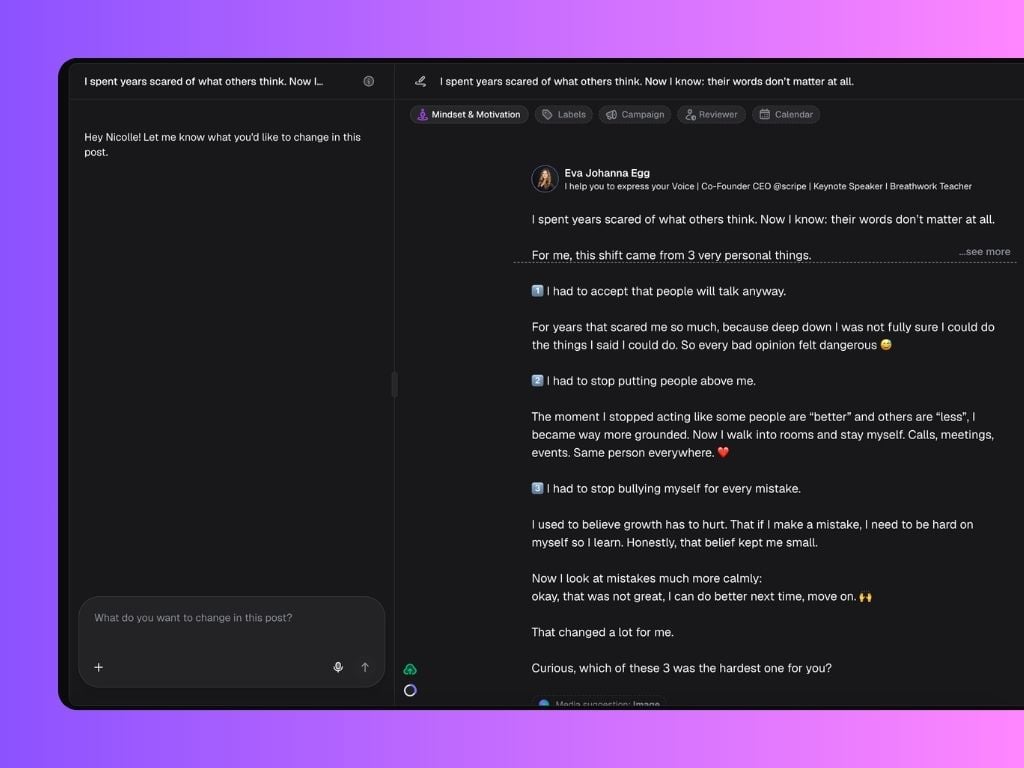
Editing Text
- Simply click into the text area to start writing or editing your post.
- Standard text editing features are available, including:
- Bold, Italic, and Underline formatting
- Bullet points or numbered lists
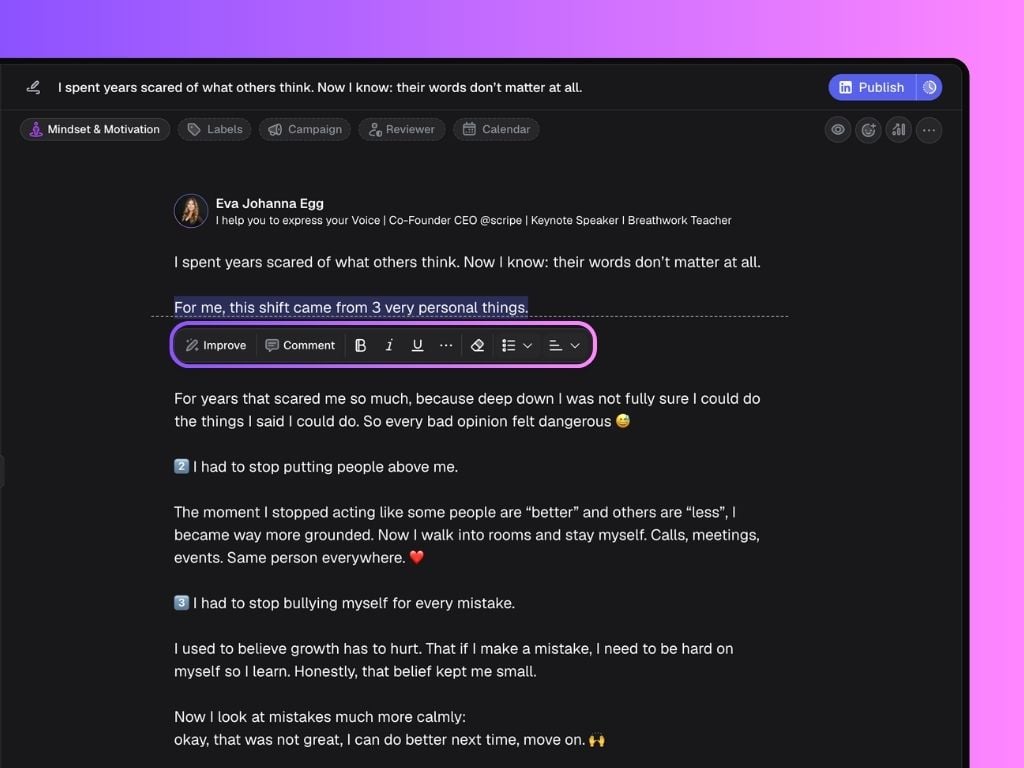
- Quick access to editing options with the toolbar that appears when you select text.
Continue the conversation in the chat
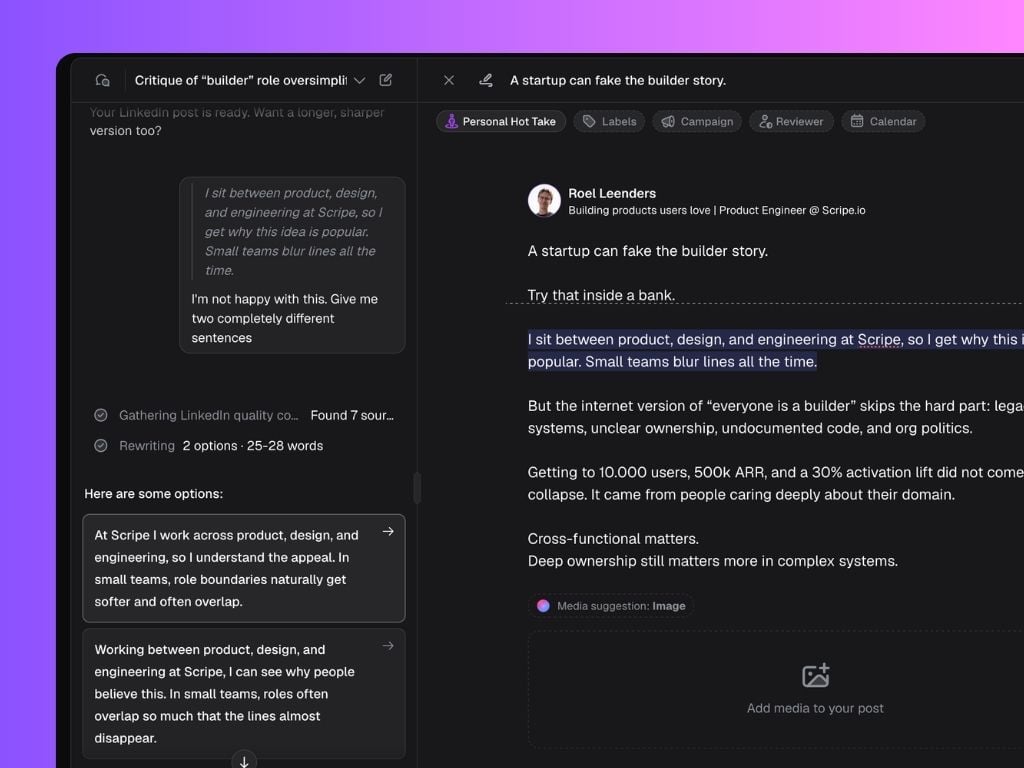
When you open a post, the chat on the left side continues the conversation you were already having while creating the draft. This means you don’t need to start over or explain the context again. Simply tell Scripe what you’d like to change, and it will update the post based on the conversation history. You can ask things like:- Make the hook stronger
- Add a personal example
- Shorten the post
- Change the tone
- Rewrite specific sections
Improve selected text with the chat
Highlight any section of your post and click Improve. You can either:- Enter your own editing instruction
- Use one of the quick actions
Using Mentions
In the Scripe Post Editor, you can tag companies and profiles directly in your LinkedIn posts by using mentions.- Type @ followed by the company or profile’s name.
- A dropdown will appear showing matching results.
- Select the correct one from the list to insert the mention.
Can’t find someone when tagging?
In that case, instead of searching by name, paste their LinkedIn profile URL (starting with linkedin.com/in) directly into the tag field, as shown in the image below: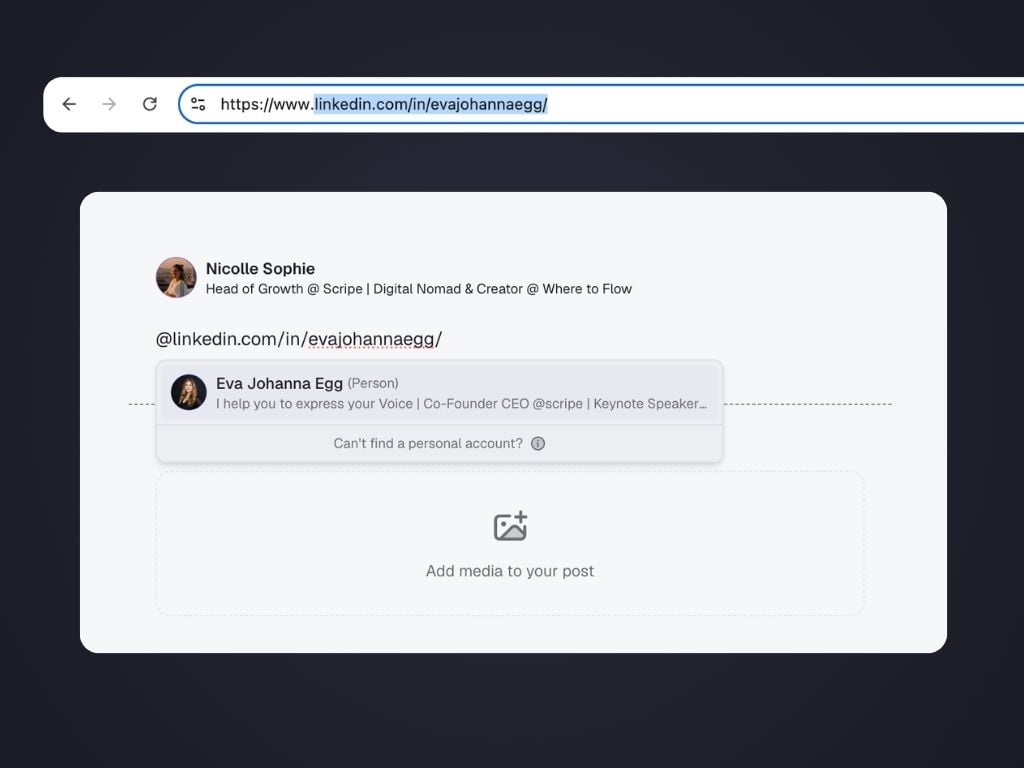
You only need to paste someone’s LinkedIn profile URL the first time you tag them. After they’ve been recognized once, you can simply search for their name in the future, and they’ll appear in the dropdown as usual.
- Company URL:
https://www.linkedin.com/company/acme-company/ - Search for:
acme-company
Note: This behavior is a limitation of LinkedIn’s API, not Scripe. If someone doesn’t appear when searching by name, using their profile URL is the most reliable way to tag them.
Adding Emojis
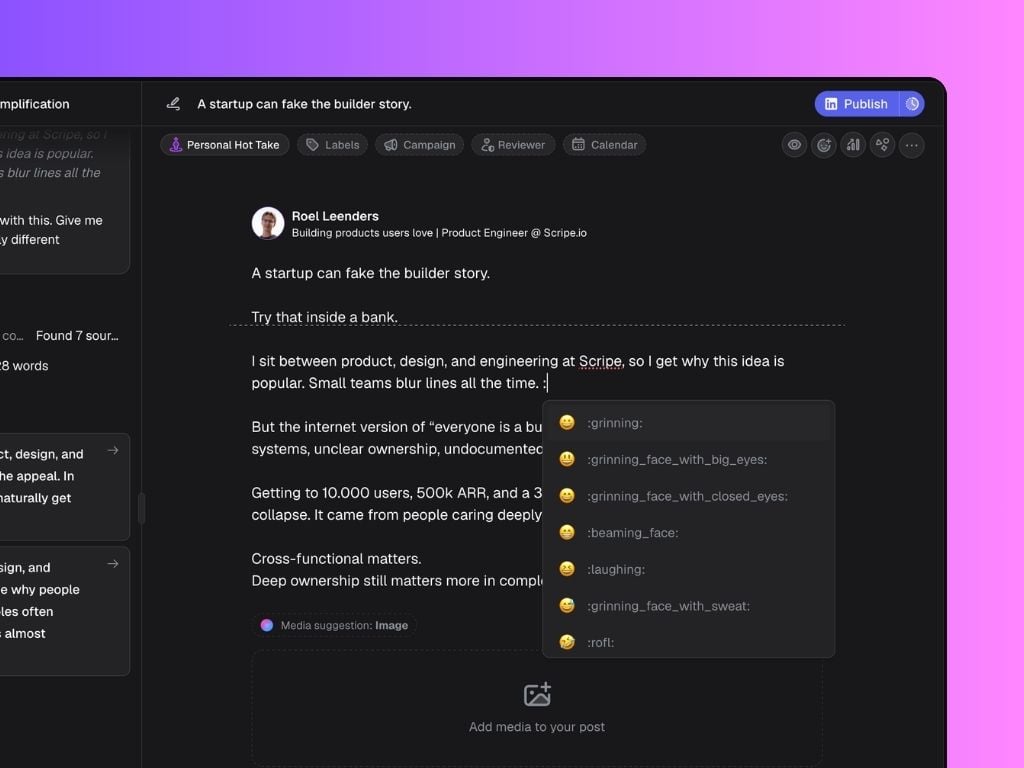
You can easily add emojis to your post inside the Scripe Editor to make your content more engaging and visually appealing.- Click on the emoji face icon located in the editor toolbar or type
:to add an emoji as you would in Slack or Notion, for example. - Browse or search for the emoji you want.
- Click on the emoji to insert it directly into your post.
Copy a Post to Clipboard
If you want to publish your post manually without scheduling through Scripe, you can quickly copy it without manually selecting the text.- Click on the three dots (···) at the editor toolbar.
- Select Copy to Clipboard.
- Your entire post will be instantly copied, ready to paste wherever you need (like directly into LinkedIn).
Adding and Managing Comments
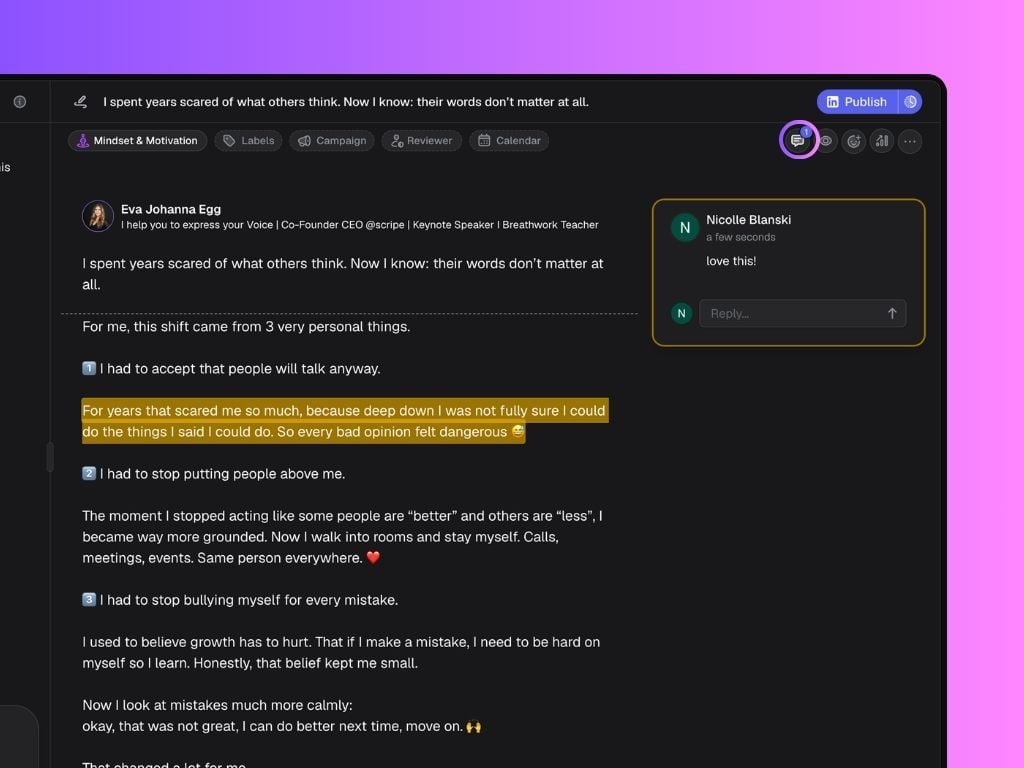
The Comment feature in the Scripe Post Editor allows you to leave feedback, notes, or suggestions directly on specific parts of your post — ideal for solo editing or team collaboration.How to Add a Comment
- Highlight the text you want to comment on.
- Click Comment from the quick action menu.
- Type your feedback or note in the comment box that appears.
How to View and Manage Comments
- To view all comments on a post, click the speech bubble icon with a number at the top right of the editor.
- This will open a panel where you can see every active comment and reply to them if needed.
Best Uses for Comments
- Leave reminders for edits or improvements.
- Ask questions or suggest changes when collaborating.
- Keep track of feedback during drafting and revision.
Note: Comments are internal only and will not appear in your final published post.
Requesting a Review
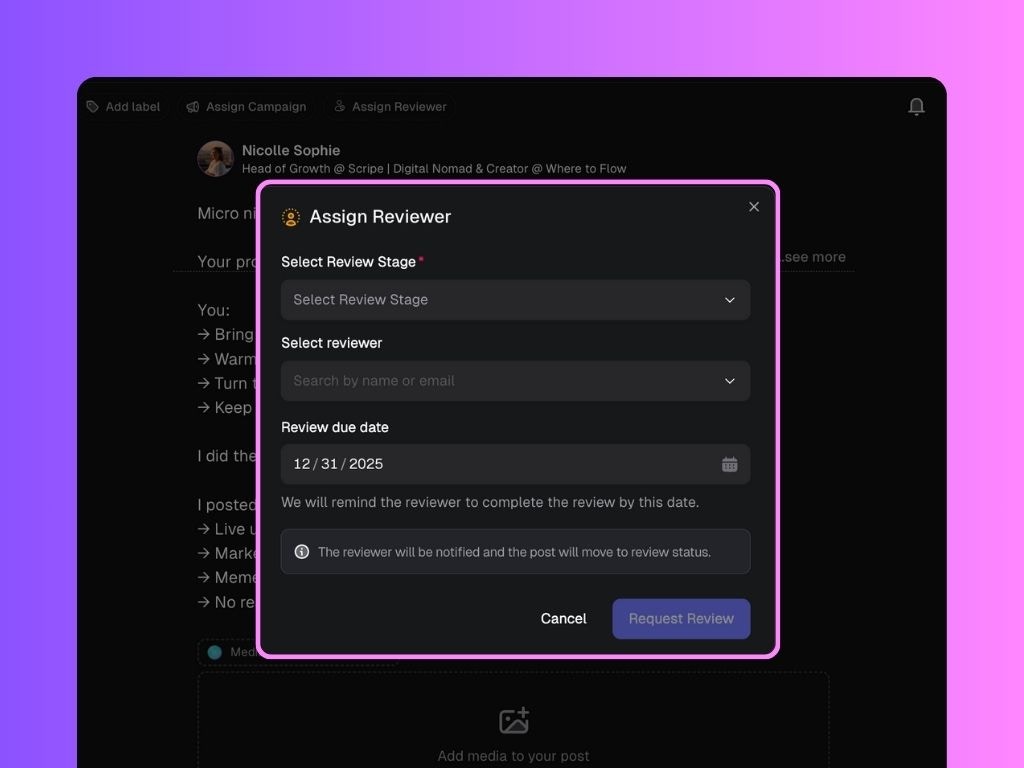
If you’re on Scripe’s Advanced or Business plans, you can request a teammate to review your draft before publishing.- Click on Assign Reviewer on the editor toolbar.
- Pick a Review Stage and select the reviewer from the dropdown list.
- Set a Review Due Date by picking a deadline from the calendar.
- Click Request Review to send the review request.
Managing Post Notifications
You can also control notifications for individual posts using the three dots (···) on the top right corner of the editor and clicking on Subscribe/Unsubscribe to updates. This is helpful if you want or no longer want to receive notifications about changes, comments, or review updates for a particular draft.Delete a Post
You can delete a draft post directly from the editor if you no longer need it.- Click on the three dots (···) on the editor toolbar.
- Select Delete.
- Confirm the action to permanently remove the post from your workspace.
Extra Tools Sidebar & Top Bar
On the right-hand side of the editor, you’ll find tools that help you create, refine, and enrich your post:- Preview: Choose between Desktop view and Mobile view to see how your post will appear on different devices.
- Stats: Get a quick overview of how your post is expected to perform before publishing.
- Post Format: You can update your post format at any time.
- Add a Label: Create your own labels via Settings to categorise your posts.
- Assign Campaign: Create your own campaigns on the worskpace and add your posts to them.
- Assign Reviewer: Request a teammate to review your draft before publishing.